The Ripple Effect of App Notifications on Table Game Entry Timing at Multi-Venue Properties
Ellis Lange · Jun 30, 2026
The Ripple Effect of App Notifications on Table Game Entry Timing at Multi-Venue Properties
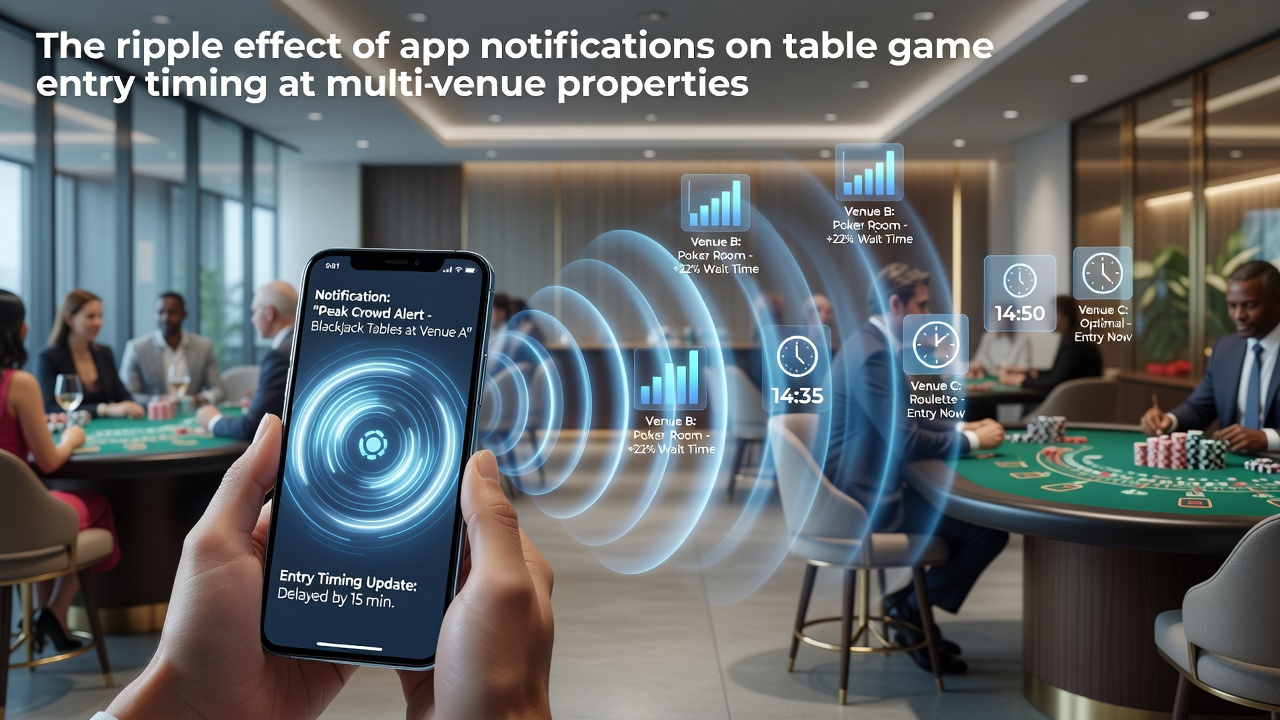
App notifications have reshaped how players approach table games across properties that operate several connected venues, and the timing of entries has become a measurable outcome of those alerts. Data from integrated resort systems shows that notifications about table openings, minimum bet changes, and promotional windows often trigger clusters of movement between locations rather than isolated decisions at single sites. Observers note that these digital prompts create synchronized patterns where groups of players arrive at tables within narrow timeframes, which then influences dealer rotations, pit boss staffing, and even adjacent slot floor traffic.
Research indicates that multi-venue operators track these patterns through unified player accounts that link mobile activity to on-site entry records. When an app sends an alert about a newly opened blackjack table at one property while another venue runs a limited-time promotion, players frequently adjust their routes accordingly. This produces measurable shifts in entry timing that extend beyond the initial notification window, sometimes by 15 to 40 minutes as individuals coordinate with companions or finish other activities first.
How Notification Triggers Influence Player Movement
Systems at large destination properties record that notifications containing real-time table data generate higher response rates than general promotional messages. A notification stating that a $25 minimum craps table has opened at a secondary venue can draw players who had been waiting at the main casino floor, and the resulting departure creates openings at the original location. Those openings then prompt new notifications, which restarts the cycle. Analysts have documented this feedback loop occurring multiple times during peak evening hours, particularly on weekends when cross-venue transportation options such as shuttles or walkways are readily available.
Studies conducted at properties with three or more distinct gaming areas reveal that players who receive stacked notifications, meaning two or more alerts within a 10-minute period, tend to delay physical entry until they evaluate all options. This evaluation period often extends the gap between notification receipt and table seating by an average of 12 minutes compared to single-alert scenarios. The delay allows operators to observe and adjust table minimums or staffing before the wave of arrivals materializes.
Cross-Venue Coordination and Timing Data
Integrated account platforms now feed entry timing statistics directly into central dashboards used by operations teams. Figures from properties operating across multiple buildings show that notification-driven entries peak approximately 8 to 14 minutes after the alert is sent, with a secondary smaller peak occurring 25 to 35 minutes later as players who were mid-meal or engaged in other activities respond. These staggered arrivals help distribute demand rather than concentrating it at a single moment, although the pattern still differs sharply from pre-app eras when entries followed more gradual, organic flows.
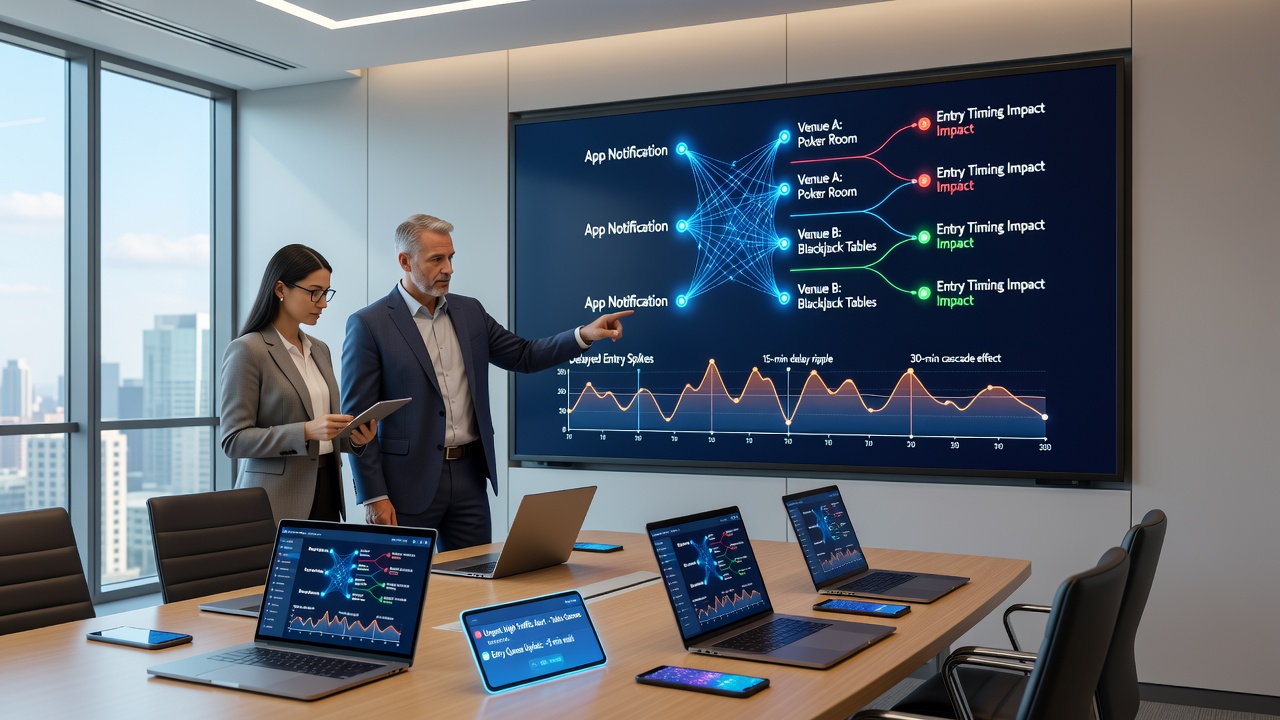
Operators have responded by calibrating notification frequency and content to smooth these waves. For instance, some properties space out alerts about table availability at secondary venues to prevent simultaneous surges, while others bundle information about multiple tables into single messages. Data collected through June 2026 indicates that properties adopting these spacing techniques recorded more consistent table utilization rates across their various locations compared with earlier periods when notifications were sent without coordination.
Operational Adjustments at Scale
Multi-venue properties have introduced operational protocols that directly reference notification patterns. Pit supervisors receive alerts when mobile systems detect rising interest in specific game types, allowing them to open backup tables before physical lines form. This preemptive approach relies on the same unified data streams that track player movement between venues. Reports compiled by industry groups such as the American Gaming Association highlight how these protocols have reduced average wait times at primary table areas during high-traffic periods.
Additional coordination occurs through partnerships with transportation services inside large resorts. When notification data predicts a surge toward a distant venue, shuttle schedules can be adjusted in advance. Records from properties that implemented such adjustments show a measurable decrease in late arrivals caused by transit delays, which in turn supports steadier game pacing once players reach the tables.
Broader Patterns Across Regions
Similar dynamics appear at integrated resorts outside the United States. Canadian operators managing multiple sites within a single complex have reported comparable entry timing shifts tied to app activity, according to summaries released by provincial gaming authorities. These findings align with observations from Australian properties where unified loyalty systems connect smartphone alerts to live table management across separate buildings. The consistent thread remains the ripple created when digital prompts intersect with physical logistics that span more than one gaming area.
Conclusion
App notifications continue to serve as a primary driver of entry timing decisions at multi-venue gaming properties, and the resulting patterns extend across staffing, transportation, and table utilization metrics. Unified tracking systems now capture these effects in detail, enabling operators to refine both notification strategies and on-site responses. As data collection expands through 2026 and beyond, the measurable connections between mobile alerts and physical table entries are expected to inform further adjustments in how properties manage player flow across their various locations.