Examining Data Overlaps Between Electronic Reel Payout Frequencies and Live Table Wager Pacing Through Centralized Player Tracking Ledgers at Multi-Property Entertainment Venues
Anna Long · Aug 2, 2026

Examining Data Overlaps Between Electronic Reel Payout Frequencies and Live Table Wager Pacing Through Centralized Player Tracking Ledgers at Multi-Property Entertainment Venues
Centralized player tracking ledgers collect detailed information from electronic reel machines and live table games across multiple properties, and operators use these systems to identify patterns in payout frequencies and wager pacing. Data from slot reels includes hit rates, average payout intervals, and session lengths while table game records capture bet sizes, decision speeds, and round durations. When these datasets merge in a single ledger, analysts can examine how activity on one type of game correlates with behavior on another.
Multi-property entertainment venues maintain unified accounts that follow patrons from one location to another, and this structure allows continuous monitoring without resetting profiles at each site. Electronic reel systems record every spin outcome and timestamp, whereas live tables rely on dealer input or automated sensors to log wagers and results. The combined ledger therefore holds a chronological record that spans both machine and table environments.
Data Integration Across Properties
Operators connect slot management software with table game databases through secure networks, and this connection enables real-time updates to individual player profiles. In August 2026 several large resort groups reported expanded use of these unified ledgers after regulatory updates in multiple jurisdictions required more granular reporting on cross-game activity. The integration process merges reel payout logs with table pacing metrics so that a single query can retrieve both sets of information for any given account.
Researchers have documented how electronic reels generate high-volume data points because each spin occurs rapidly, while live tables produce fewer but more detailed entries per minute. When the two streams enter the same ledger, statistical models can test whether frequent small reel payouts influence subsequent table bet sizing or pace. Observers note that the ledger structure supports these comparisons without requiring separate databases for each game type.
Analysis of Reel and Table Interactions
Studies conducted by industry research groups show that certain payout frequency patterns on reels appear alongside measurable changes in table game pacing for the same accounts. For instance, accounts with above-average reel hit rates sometimes record shorter decision times at blackjack or roulette tables during the same visit. Centralized ledgers make these comparisons possible because every transaction carries a common player identifier and timestamp.
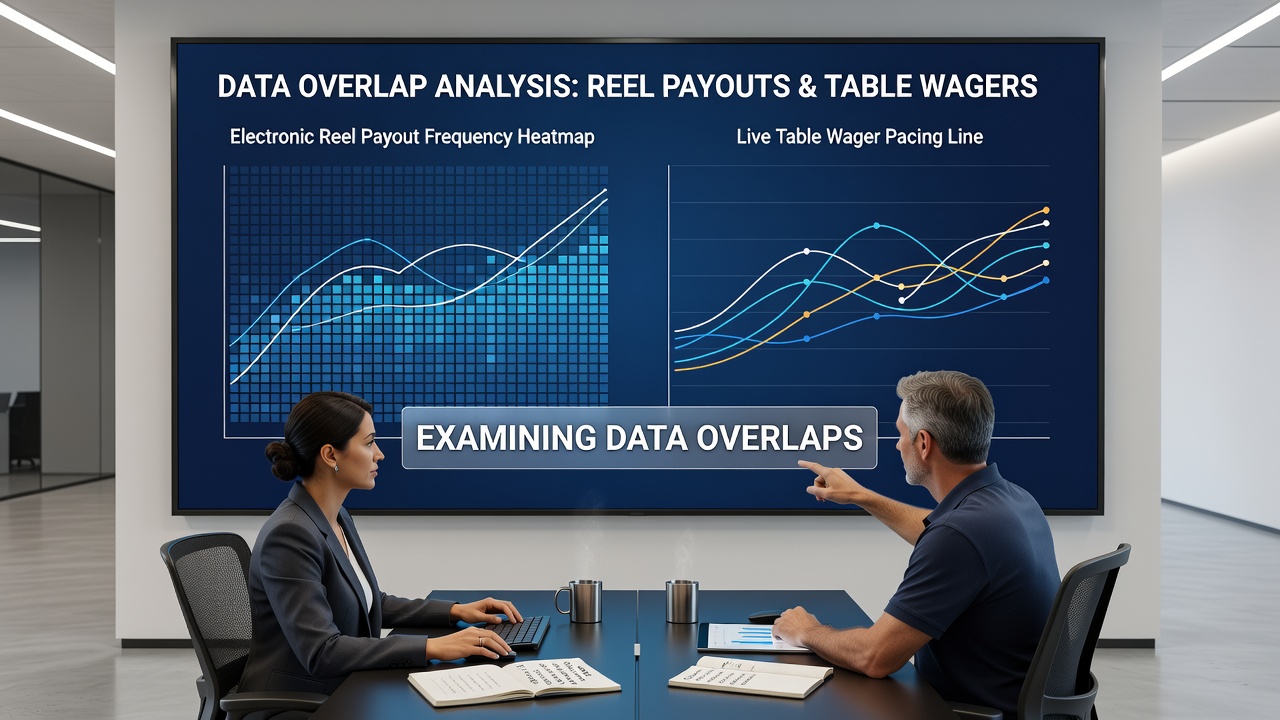
According to figures released by the Nevada Gaming Control Board, multi-property operators processed over 12 billion reel transactions and 180 million table game entries through centralized systems in the 2025 fiscal year. These volumes provide sufficient sample sizes for examining overlaps, and analysts apply time-series methods to align reel sessions with table sessions that occur within the same property visit. The resulting correlations remain descriptive rather than predictive at this stage of industry reporting.
Regulatory and Technical Considerations
Gaming authorities in several regions require operators to maintain audit trails that link all game activity to individual accounts, and centralized ledgers satisfy this requirement while also supporting internal analysis. Technical standards from organizations such as the Gaming Standards Association define data formats that allow reel and table systems to feed the same ledger without format conversion delays. As a result, multi-property groups can generate compliance reports and operational dashboards from a single source.
One study released by the Australian Institute of Criminology examined ledger data from integrated resorts and found consistent alignment between reel payout intervals and average table wager durations for accounts that moved between game types. The report emphasized that such patterns emerge only when data collection remains continuous across properties, a condition met by centralized tracking systems.
Future Developments
Industry reports indicate that additional properties plan to upgrade ledger platforms in late 2026 to incorporate machine learning tools that flag potential overlaps for further review. These upgrades build on existing infrastructure rather than replace it, and they continue to rely on the same core data streams from reels and tables. Regulatory bodies in Canada and several U.S. states have begun requesting summary statistics derived from these merged datasets as part of routine oversight.
Conclusion
Centralized player tracking ledgers at multi-property venues compile reel payout frequencies and live table wager pacing into unified records that support systematic examination of overlaps. Data volumes continue to grow as more properties adopt integrated systems, and regulatory reporting requirements reinforce the need for accurate cross-game linkage. Observers continue to monitor how these merged datasets evolve through 2026 and beyond.